EPD Consultancy
Professional EPD Consultancy services to prepare Environmental Product Declarations and see them through independent verification and publication…
EPD and LCA preparation for manufacturers selling in Sweden and Europe, from ERKE's sustainability team.
Professional EPD Consultancy services to prepare Environmental Product Declarations and see them through independent verification and publication…
An Environmental Product Declaration (EPD) provides transparent, verified data on a product’s environmental impact using LCA methodology.
Learn how to obtain an Environmental Product Declaration (EPD) and explore the key standards like ISO 14025 and EN 15804.
The ISO 14025 standard transparently reports product environmental impacts, supporting sustainable choices and green practices.
LEED certifies buildings for sustainability, energy efficiency, and environmental impact, promoting green design
BREEAM Certification is a global green building standard that assesses sustainability, energy efficiency, and environmental impact.
EPD SWEDEN is a team of experts providing Environmental Product Declaration (EPD) consultancy services. Operating under ERKE, our team has successfully completed numerous projects in different countries and stands by your side to support your sustainability goals.
EPD SWEDEN is managed by a team of experts providing Environmental Product Declaration (EPD) consultancy services under ERKE. Our team guides companies through all necessary processes to document the environmental impacts of their products transparently and scientifically. Having successfully completed numerous projects in various countries, EPD SWEDEN is a reliable partner for firms seeking compliance with global sustainability standards. Our mission is to support companies in improving their environmental performance and contribute to a more sustainable world.
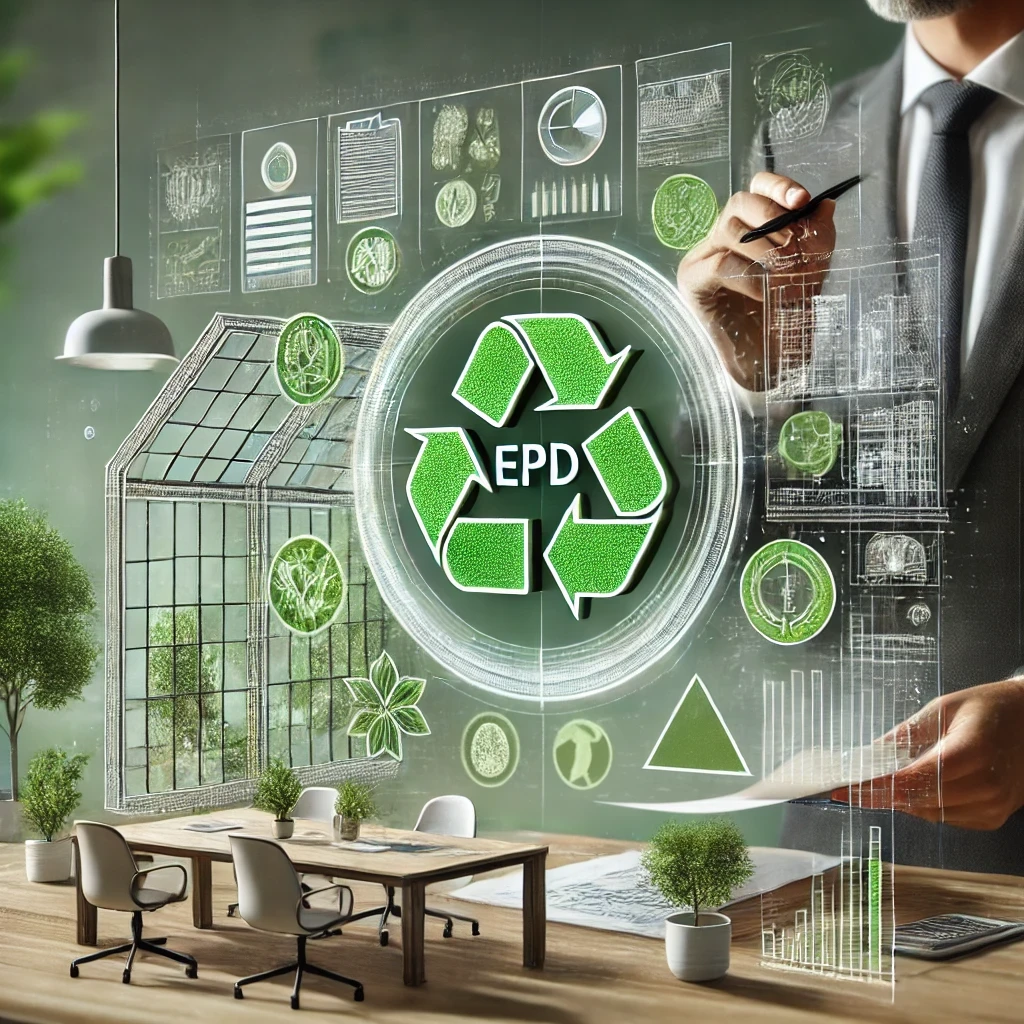
EPD (Environmental Product Declaration) is a document prepared in accordance with ISO 14025 that scientifically and objectively evaluates the environmental impacts of a product throughout its life cycle. The purpose of an EPD is to transparently present the environmental performance of products, enable comparison between different products, and promote sustainable production and consumption processes.
The first step of the EPD process is collecting the necessary data to accurately analyze the environmental impacts of the product throughout its life cycle. At this stage, information is gathered from all phases, including energy consumption in production, raw material usage, waste management, and logistics. It is crucial for the data to be accurate, complete, and consistent.
The collected data is modeled using various software and databases to prepare the Life Cycle Assessment (LCA) report. This analysis identifies the environmental impacts of the product throughout all stages, from "raw material extraction to the end-user" and even "end-of-life disposal." The LCA report is prepared in compliance with ISO 14040/44 and EN 15804 standards, forming the foundation of the EPD.
The preparation of the EPD begins with converting the Life Cycle Assessment (LCA) results, which evaluate the product's environmental impacts, into a format compliant with ISO 14025 and EN 15804 standards. The LCA analysis details the product's environmental impacts across different stages, from production to end-of-life disposal. During the preparation phase, a company-specific EPD document is designed following the rules and guidelines set by EPD program operators. Environmental data is enriched with graphics and tables to create a transparent, comprehensible, and visually as well as technically flawless document.
The prepared LCA report and EPD document are reviewed by an independent and accredited third-party verifier. This review ensures the accuracy of the provided information and its compliance with international standards. Once the verification process is completed, the EPD document is officially approved.
After the verification phase is completed, the EPD is published by the international program operator chosen by the manufacturer.
The publication of Environmental Product Declarations (EPDs) is carried out by independent EPD program operators that operate in compliance with international standards. These organizations manage the processes of verifying, registering, and publishing EPD documents on international platforms. Below are some of the prominent EPD publishing organizations worldwide.


An EPD document consists of the following key components:
An EPD can be prepared for a wide range of products. It is commonly used for the following:
In short, an EPD can be prepared for any product whose environmental impacts need to be assessed.
EPD is based on the results of an LCA analysis. Life Cycle Assessment (LCA) evaluates the environmental impacts of a product throughout its entire life cycle, from raw material extraction to waste disposal. This analysis forms the foundation of the EPD, determining the product's environmental impacts such as carbon footprint, energy consumption, and water usage. LCA ensures the scientific accuracy and reliability of the EPD, while the EPD presents these results to the public in a standardized format.
Therefore, EPD is a critical tool for achieving environmental sustainability goals and standing out in the market.
EPD Sweden, operating under ERKE, provides consultancy services for Environmental Product Declarations (EPD).
It analyzes the environmental impacts of products throughout their life cycle and prepares EPD documents in compliance with international standards. To support companies in achieving their sustainability goals, EPD Sweden offers services such as Life Cycle Assessment (LCA), carbon footprint calculation, and environmental data collection and reporting. With a proven track record of successfully completed projects from Saudi Arabia to Australia, our expert team helps companies gain a competitive edge in global markets and document their environmental responsibility.
EPD Sweden leads the way toward a sustainable future.
EPD Sweden
Professional EPD Consultancy services to prepare Environmental Product Declarations and see them through independent verification and publication…
BREEAM Certification is a global green building standard that assesses sustainability, energy efficiency, and environmental impact.
LEED certifies buildings for sustainability, energy efficiency, and environmental impact, promoting green design
EPD helps measure and reduce carbon footprint by providing transparent, verified data on a product’s life cycle environmental impact.
EPD enhances market competitiveness by promoting transparency, sustainability, and compliance in both local and global markets.
EPD certificates are typically valid for 5 years, requiring renewal through updated LCA studies and third-party verification.